Long before copper pots, metal ovens, and modern convection kitchens existed, ancient Andean civilizations unlocked one of the most sophisticated thermodynamic cooking techniques in human history: Pachamanca.
Recognized as Cultural Heritage of the Nation in Peru, Pachamanca is derived from two Quechua words: Pacha (Earth, Cosmos, or Time) and Manka (Pot or Oven). Translated literally, it means "Earth Oven" or "Cooking in the Womb of Mother Earth."
Documented across pre-Inca archaeological sites dating back over 3,000 years, Pachamanca was historically prepared during major solstices, lunar celebrations, and agricultural harvests to honor Pachamama (Mother Earth). By placing the bounty of the land back into the earth to cook, ancient highlanders closed the sacred ecological circle of reciprocity (Ayni).
Today, participating in a traditional Pachamanca in the Sacred Valley of the Incas is among the most profound culinary and cultural experiences accessible to international travelers.
Subterranean Physics: Volcanic Rocks & Thermal Herbs
A genuine Pachamanca cannot be replicated on a conventional kitchen stovetop. It relies on precise ancestral physics:
- Selecting the Stones: Traditional master cooks (maestros pachamanqueros) inspect every rock with expert scrutiny. They use strictly dense volcanic basalt or andesite stones collected from high mountain scree slopes. These stones withstand intense thermal shock.
- The Fire Pyramid: A domed pyramid of firewood (typically dry eucalyptus, native queñua, and chachacomo wood) is constructed inside a shallow pit dug into clean earth. The volcanic rocks are stacked carefully over the wood framework.
- Heating to 400°C: The fire burns furiously for approximately 2 to 3 hours until the volcanic rocks glow with translucent, white-hot heat, reaching temperatures between 400°C and 500°C (750°F to 930°F).
- The Herb Marinade: The meats—traditionally a combination of lamb, pork, chicken, and sometimes alpaca—are marinated for 24 hours in a vibrant emerald paste made from freshly ground chincho, huacatay, garlic, Andean cumin, yellow ají pepper, and chicha de jora.
The Step-by-Step Layering: Meats, Tubers & Banana Leaves
Once the wood coals settle, the maestro collapses the stone dome into the pit and begins an intricate layering choreography that takes less than 10 minutes to prevent thermal heat loss:
- Layer 1 (The Bed): The largest, hottest incandescent stones are spread across the base of the pit.
- Layer 2 (The Dense Roots): Hard Andean tubers that require the longest thermal exposure are laid directly against the hot rocks: native yellow potatoes, sweet potatoes (camote), oca, and mashwa.
- Layer 3 (The Meats): A secondary layer of flat hot stones is placed over the tubers, followed immediately by generous cuts of marinated pork, lamb, and chicken wrapped in fresh wild banana leaves (hojas de plátano) to lock in moisture.
- Layer 4 (The Delicate Legumes): Fresh fava beans (habas) in their thick green pods, ears of giant Andean white corn (choclo), and sweet corn cakes (humitas) wrapped in corn husks are placed on top.
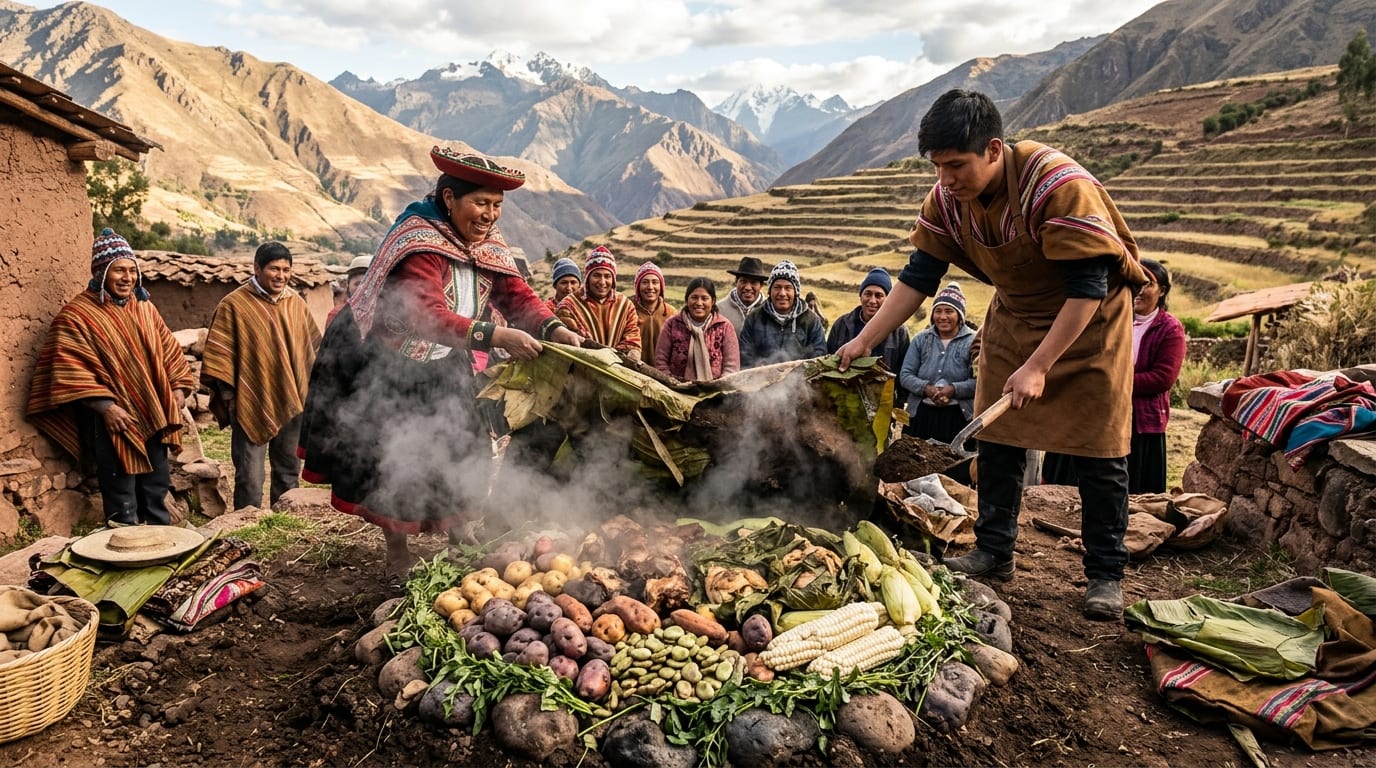
- Layer 5 (The Thermal Seal): Bundles of fresh wild huacatay and chincho herbs are piled over the food, filling the pit with fragrant aromatics. The entire assemblage is draped with clean wet burlap blankets (lonas) and sealed completely with a 15-centimeter mound of excavated soil.
Thermodynamic Principle: Sealed beneath the earth, zero steam escapes. The soil traps 100% of the radiant conduction heat from the volcanic rocks and convection steam from the moist herbs, creating a subterranean pressure cooker that tenderizes the meats into melt-in-your-mouth perfection in approximately 90 minutes.
The Unearthing Ritual (El Desentierro): Sensory Explosion
When the maestro signals that cooking is complete, guests gather around the earth mound with glasses of chicha de jora or pisco.
The unearthing begins with quiet reverence:
- Shovels carefully remove the top layer of dry soil without piercing the protective canvas.
- The wet burlap blankets are peeled back, releasing a monumental, billowing cloud of fragrant, herb-infused thermal steam that envelops everyone standing near the pit.
- The aroma is intoxicating: caramelized roasting pork, sweet toasted corn, earthy baked potatoes, and the unmistakable, minty herbal punch of wild chincho.
- Each tier of food is lifted out into wide clay platters (fuentes de barro). Meats slide effortlessly off the bone, potato skins crackle with smoky char, and sweet humitas burst with steaming warmth.
Where to Experience an Authentic Pachamanca in Cusco
For travelers who wish to witness and taste this ancestral feast, avoid mass tourist buffets. Instead, book dedicated experiential lunches:
- Hacienda Huayoccari (Urubamba, Sacred Valley): Set in an aristocratic colonial estate with one of Peru’s finest private collections of pre-Columbian folk art, offering private, curated Pachamanca demonstrations on pristine garden lawns.
- El Albergue Ollantaytambo (Organic Farm): Located adjacent to the historic train station, this eco-lodge operates a certified organic farm where guests harvest native vegetables before participating in the stone heating and subterranean burial.
- Lamay & Maras Rural Communities: Several indigenous family cooperatives in the Sacred Valley host authentic family Pachamancas paired with traditional Quechua music and weaving demonstrations.