Sitting at the eastern gateway of the Sacred Valley just 33 kilometers (20 miles) northeast of Cusco lies Pisac.
To most casual tourists, Pisac is known primarily for its bustling handicraft market filling the colonial Plaza de Armas with colorful alpaca blankets, silver jewelry, and ceramics.
Yet high above the town, draped across a serpentine mountain ridge overlooking the rushing Vilcanota River at an elevation of 3,347 meters (10,980 feet), sits one of the most structurally monumental, sprawling, and spiritually significant citadels of the entire Inca Empire. Archaeologically, Pisac rivals Machu Picchu in agricultural scale, residential complexity, and ceremonial masonry.
Understanding how to experience Pisac beyond the souvenir stalls transforms an ordinary day trip into an exhilarating alpine archaeological trek.
Archaeological Sectors: Intihuatana, K'allaqasa & Cliff Tombs
Pisac was not a single fortress; it was a royal imperial estate established by the ninth Inca ruler, Pachacuti, divided into distinct architectural sectors:
- Q'allaqasa (The Military Citadel): Perched along the topmost knife-edge ridge, this complex of watchtowers, garrison quarters, and barracks guarded the eastern canyon approaches from Amazonian forest invaders.
- The Intihuatana Sector (The Sun Temple): The spiritual core of Pisac, featuring masterfully carved imperial andesite stonework rivaling the Qorikancha in Cusco. At its center stands the Intihuatana—the "Hitching Post of the Sun"—a sacred granite outcrop carved into a solar altar used by Inca astronomers to track equinoxes, solstices, and planting calendars.
- Tantana Marka (The Cliff Cemetery): Looking across the Quitamayo gorge, the sheer limestone canyon wall is perforated with more than 1,000 natural cavities and stone niches. This was the largest pre-Columbian burial ground in South America, where Inca elite were mummified in fetal positions facing the rising sun.
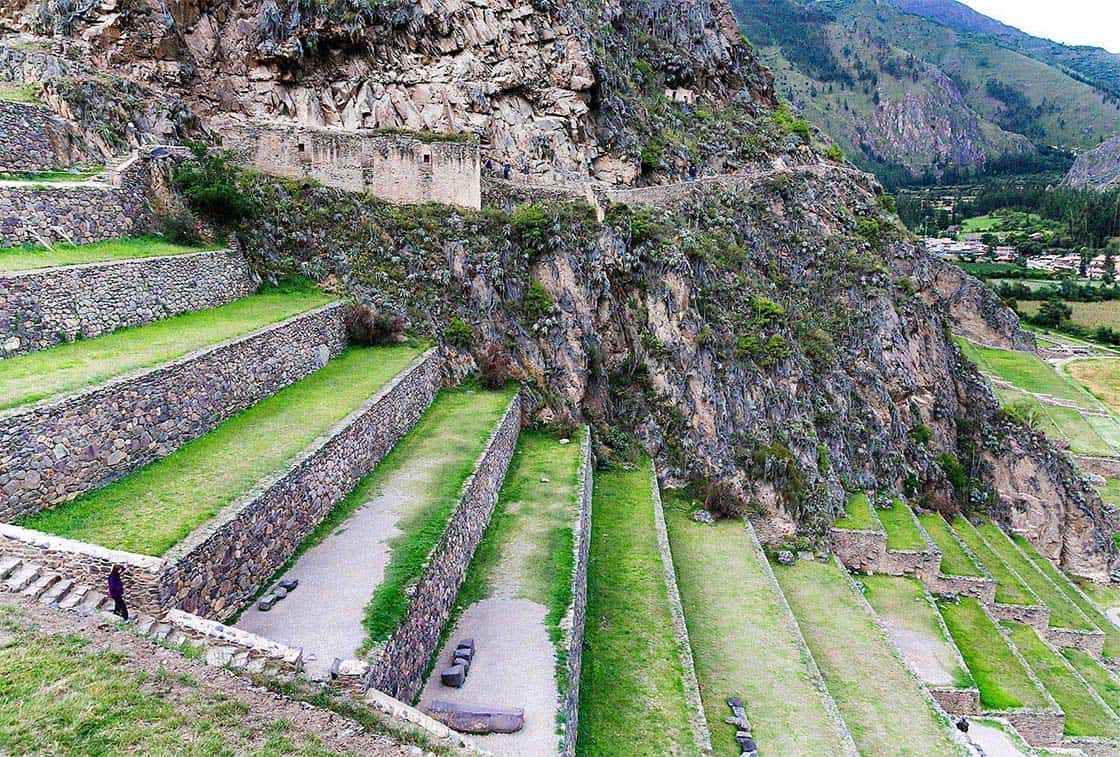
- The Agricultural Terraces (Andenes): Sweeping gracefully in sweeping parabolic curves across the entire mountain flank, these monumental terraces still feature functional gravity irrigation canals and stone drainage channels that prevent mountain landslides.
The Master Hike: 3.5km Downhill from Upper Ruins to Town
The definitive way to experience Pisac requires hiring a private driver to drop you at the upper parking lot (Q'allaqasa), allowing you to hike entirely downhill into Pisac town:
- Trail Distance: 3.5 kilometers (2.2 miles).
- Elevation Descent: Drops approximately 400 vertical meters (1,312 feet) from 3,347m down to Pisac town at 2,972m.
- Hiking Time: 2 to 2.5 hours at an unhurried photographic pace.
- The Path: Follows ancient paved Inca stone steps traversing through tunnels carved directly into living rock (La Coya), winding past the Intihuatana solar temple, and descending through the lower terrace walls directly into the colonial cobblestone streets of Pisac.
- Physical Rating: Moderate. While entirely downhill, the stone steps are uneven and require sturdy trekking boots with good ankle support. Carrying trekking poles with rubber tips protects your knees from repetitive impact.
Crowd Strategy: Beating the 11:00 AM Tour Bus Rush
Mass commercial tour buses depart Cusco around 8:30 AM and arrive at Pisac in massive convoys between 10:45 AM and 1:00 PM, clogging the upper lookouts with tour groups following megaphone guides.
To experience Pisac in contemplative tranquility:
- Depart Cusco at 7:00 AM: Arriving at the Pisac gates by 8:00 AM allows you to explore the military barracks and Sun Temple in pristine early morning mountain light, with only the sound of high-altitude hummingbirds and canyon breezes.
- Late Afternoon Alternative: Arriving at 2:30 PM after the tour buses have rushed down to Urubamba for lunch grants you an empty citadel bathed in the golden, angled rays of the late afternoon Andean sun.
The Artisan Market: Sunday Traditions vs. Daily Stalls
- The Sunday Indigenous Market: Sunday is the traditional day when indigenous Quechua families from twelve high mountain farming communities (comunidades campesinas) walk down to Pisac in their finest handwoven traditional dress. Local community leaders (Varayocs) carry silver-tipped wooden staffs of office to Sunday morning mass celebrated in Quechua at the colonial church of San Pedro Apóstol.
- Daily Market Reality: Tuesday, Thursday, and Saturday feature lively artisan stalls; Monday, Wednesday, and Friday feature a smaller, more intimate market footprint filling the main square and adjoining alleys.
- Artisan Reality: Look beyond the mass-produced synthetic souvenirs. Seek out genuine artisan stalls selling hand-hammered silver jewelry (platería), traditional Andean flutes (quenas and zampoñas), and naturally dyed sheep and alpaca textiles woven by women from high-altitude communities like Amaru and Chahuaytire.
Local Empanadas, Traditional Wood Ovens & Altitude
After concluding your descent hike from the ruins, do not leave town without sampling Pisac’s culinary claim to fame:
- The Colonial Wood Ovens: Walk down Calle Mariscal Castilla or Calle Bolognesi to find historic domed clay ovens (hornos coloniales) that have burned eucalyptus firewood continuously for over two centuries.
- Hot Baked Empanadas: Bakers pull piping-hot empanadas straight from the embers on long wooden paddles. Choose between savory fillings: empanada de queso (Andean cheese with oregano and onions) or empanada de carne (minced beef with olives, egg, and raisins). Each empanada costs barely S/ 4 to S/ 5 Soles ($1.10–$1.35 USD).