During the height of the Tawantinsuyu (Inca Empire), an imperial highway network of over 40,000 kilometers known as the Qhapaq Ñan stitched together South America’s most rugged alpine terrain—spanning modern-day Colombia, Ecuador, Peru, Bolivia, Chile, and Argentina.
To cross bottomless river canyons where timber was scarce and stone arches impossible to construct, Inca engineers perfected the art of the hanging rope bridge (Keshwa Chaca). Woven entirely from wild mountain grass, these suspension spans were so sturdy that Spanish conquistadors on armored horseback crossed them with awe during their 1532 invasion.
Over the centuries, modern steel bridges and concrete highways replaced the ancient rope network. Today, exactly one single handwoven Inca suspension bridge remains alive on planet Earth: Q’eswachaka (Q'eswachaka), hanging precariously over the roaring Apurímac River gorge in the remote province of Canas, south of Cusco.
The Physics of Q'oya Grass: From Blade to Cable
The engineering brilliance of Q’eswachaka lies in the transformation of fragile, wild mountain grass into load-bearing cables capable of supporting multiple adult humans simultaneously:
- Harvesting the Q'oya (Stipa obtusa): Weeks before the reconstruction, families from four local Quechua communities (Huinchiri, Chaupibanda, Choccahua, and Ccollana Quehue) head into the high punas above 4,000 meters (13,120 feet) to harvest bundles of tough, spiky Q'oya grass.
- Pounding & Soaking: The stiff grass blades are beaten with round river stones (morteros) and soaked in mountain streams to soften their fibers and release natural pliant latex resins.
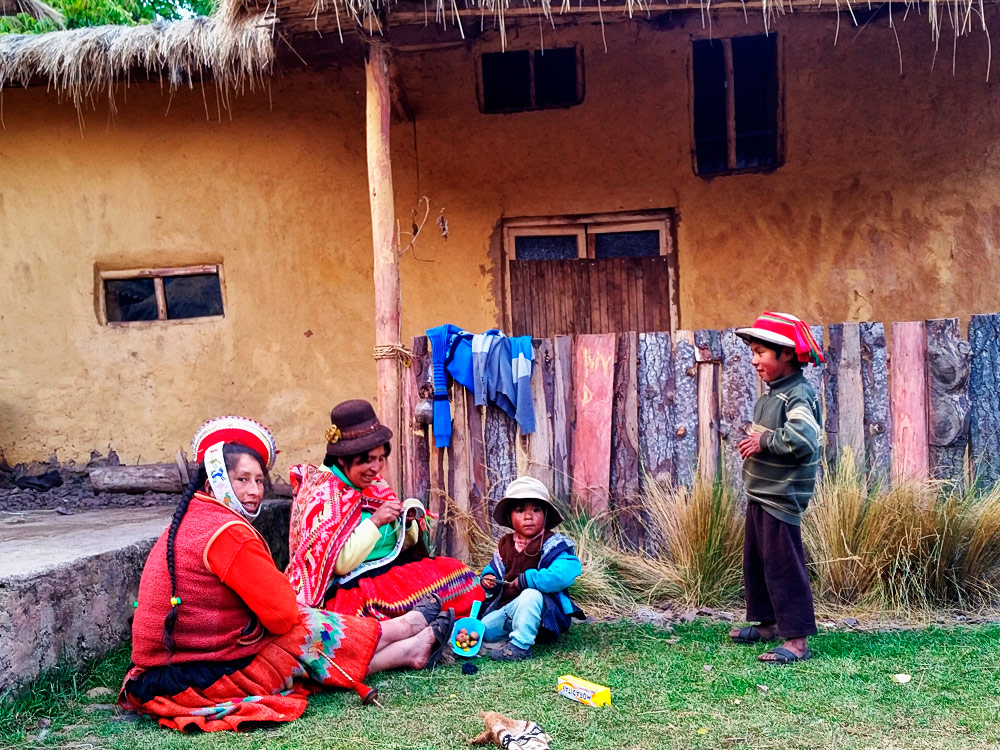
- Braiding the Thin Cords (Q'eswas): Women and children sit together along village lanes, twisting individual strands of grass between their palms and feet to spin thousands of meters of slender two-ply ropes (q'eswas).
- Braiding the Heavy Hauling Cables: The men take dozens of these thin cords and braid them tightly into six massive master cables (duros), each measuring as thick as a human thigh and weighing several hundred pounds:
- 4 Base Cables: Form the floor walkway (piso).
- 2 Handrail Cables: Form the chest-height side railings (pasamanos).
The 4-Day Reconstruction Festival (Every June)
Every year during the second weekend of June, the four indigenous communities gather at the Apurímac canyon for an extraordinary 4-day communal work ritual (Ayni):
- Day 1 (Cutting Down the Old Bridge): Master spiritual shamans (Paqos) make sacred offerings of coca leaves, llama fat, and chicha de jora to the river spirit (Apu Apurímac). With ceremonial approval granted, the old, weathered bridge from the previous year is cut from its anchor stones and plunges down into the roaring river, washed away by the current.
- Day 2 (Stringing the Master Cables): Fearless village runners swim across the river or cast thin lead lines to haul the six colossal new master cables across the 28-meter abyss. The cables are lashed and tensioned around massive pre-Inca stone anchor pillars (estribos) carved into the canyon cliffs.
- Day 3 (Weaving the Lattice): The two designated master weavers (Chakaruwak) begin advancing from opposite sides of the canyon toward the center, suspended over the churning river with no safety harnesses or nets. Working for eight uninterrupted hours, they weave a continuous lattice of small branches, brush, and side ropes connecting the handrails to the floor. When they meet and embrace in the middle, the bridge is reborn.
- Day 4 (The Grand Fiesta): The communities celebrate with colorful traditional dances (such as the Qhashwa), brass bands, and communal feasts of roasted native lamb and potatoes.
Walking Across: Swaying Motion, Canyon Depths & Safety
Stepping onto Q’eswachaka is a profound psychological and sensory experience:
- The Sensation: The floor consists of braided grass ropes covered with woven twigs and wild cane (caña brava). As you step onto the middle of the span, 15 meters (50 feet) above the churning brown waters of the Apurímac, the bridge gently sways and undulates beneath your weight.
- The Grasp: Your hands grip the thick, prickly, natural grass handrails. The scent of sun-baked mountain hay and drying river silt fills your senses.
- Safety Protocol: Only two to three adults are permitted on the bridge simultaneously. Always keep both hands on the side handrails, walk with deliberate, balanced steps, and avoid sudden bouncing or running.
Getting There: Four Lagoons Route & Full-Day Logistics
Because Q’eswachaka sits in a remote canyon 110 kilometers (68 miles) south of Cusco, visiting it requires a dedicated 10 to 11-hour private day trip:
- 6:00 AM Departure: Depart Cusco in a comfortable private 4x4 or transport van heading south along the paved highway toward Puno.
- The Four Lagoons Circuit: En route, the drive skirts four stunning high-altitude Andean lakes: Pomacanchi, Acopia, Asnacocha, and Pampamarca. Flocks of Andean flamingos (parihuanas), speckled teals, and giant coots paddle along the mirror-calm shores framed by rolling golden hills.
- 10:30 AM Arrival at Q'eswachaka: Spend 2 hours marveling at the bridge, crossing the span, taking photography from both canyon banks, and meeting local community custodians.
- 1:00 PM Scenic Picnic Lunch: Enjoy a picnic overlooking the lagoon of Pomacanchi or a traditional trout lunch in a lakeside village before returning to Cusco by 5:00 PM.